- SkaleBot
- Posts
- How often should brands message on WhatsApp?
How often should brands message on WhatsApp?
Frequency Control on WhatsApp: How much is “Too Much”?

SkaleBot by Deskala
December 03, 2025 • Estimated Reading Time: 5 minutes
Heyyy Team!!
Ever texted someone three times in a row and immediately regretted it?
Yeah, Businesses on WhatsApp do that every day and customers leave them on read forever.
Let’s fix that!
Why Frequency Matters (Like… a LOT)
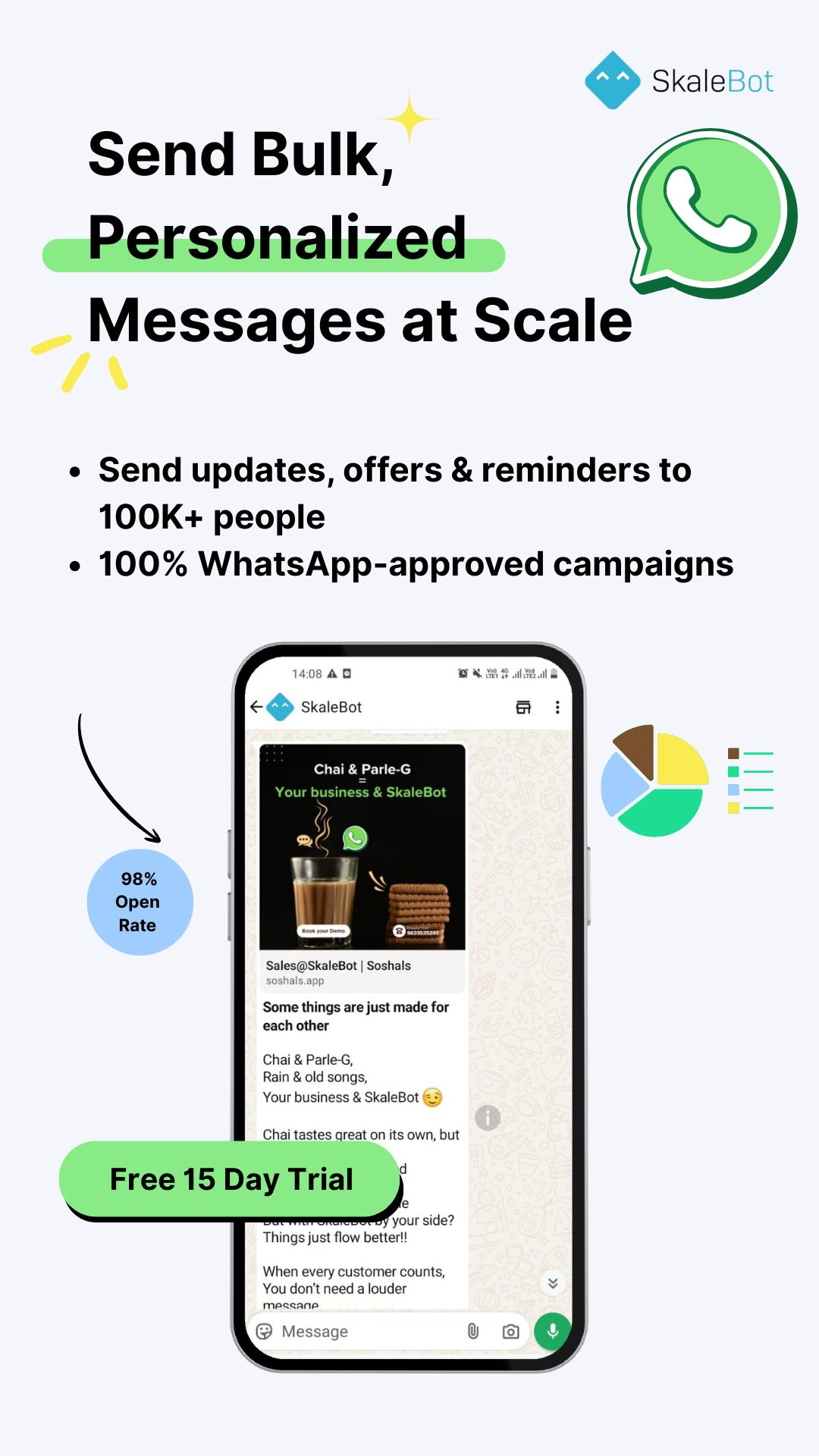
WhatsApp has 98% open rates, but that doesn’t mean you should message like a hyperactive salesperson on Red Bull.
Consistency = good
Clinginess = block
Most brands either:
~ Message once a month (and get forgotten), or
~ Message every other day (and get muted/blocked faster than family WhatsApp groups)
There’s a sweet spot and it’s backed by behavior patterns, retention data, and campaign insights.
Please Note:
Effective 1st January 2026, Meta has revised WhatsApp APIs conversation/message pricing.
New India Message Rates (Effective 01 Jan 2026):
Marketing Messages: ₹0.92 per message,
Utility/Service Messages: ₹0.15 per message.
Please feel free to reach out if you need clarification or wish to understand how these changes may affect your campaigns. (Accordingly, our billing will reflect the updated rates across all communication channels.)
 Best for: SaaS, Retail, EdTech, Fitness, Restaurants, Any brand with regular but non-aggressive campaigns | 1- 2 Messages per Week → The Universal Sweet Spot This is the safest, most effective frequency for most industries.
Use this for: Weekly promo, New arrivals/ Services, Helpful insights & “We thought you’d like this” content. Think of this as your steady, relationship-building rhythm. |
3-5 Messages per Week → High-Intensity Campaign ModeUse this when your brand is in a period of heavy activity like festivals: Why it works in these cases:
But: | 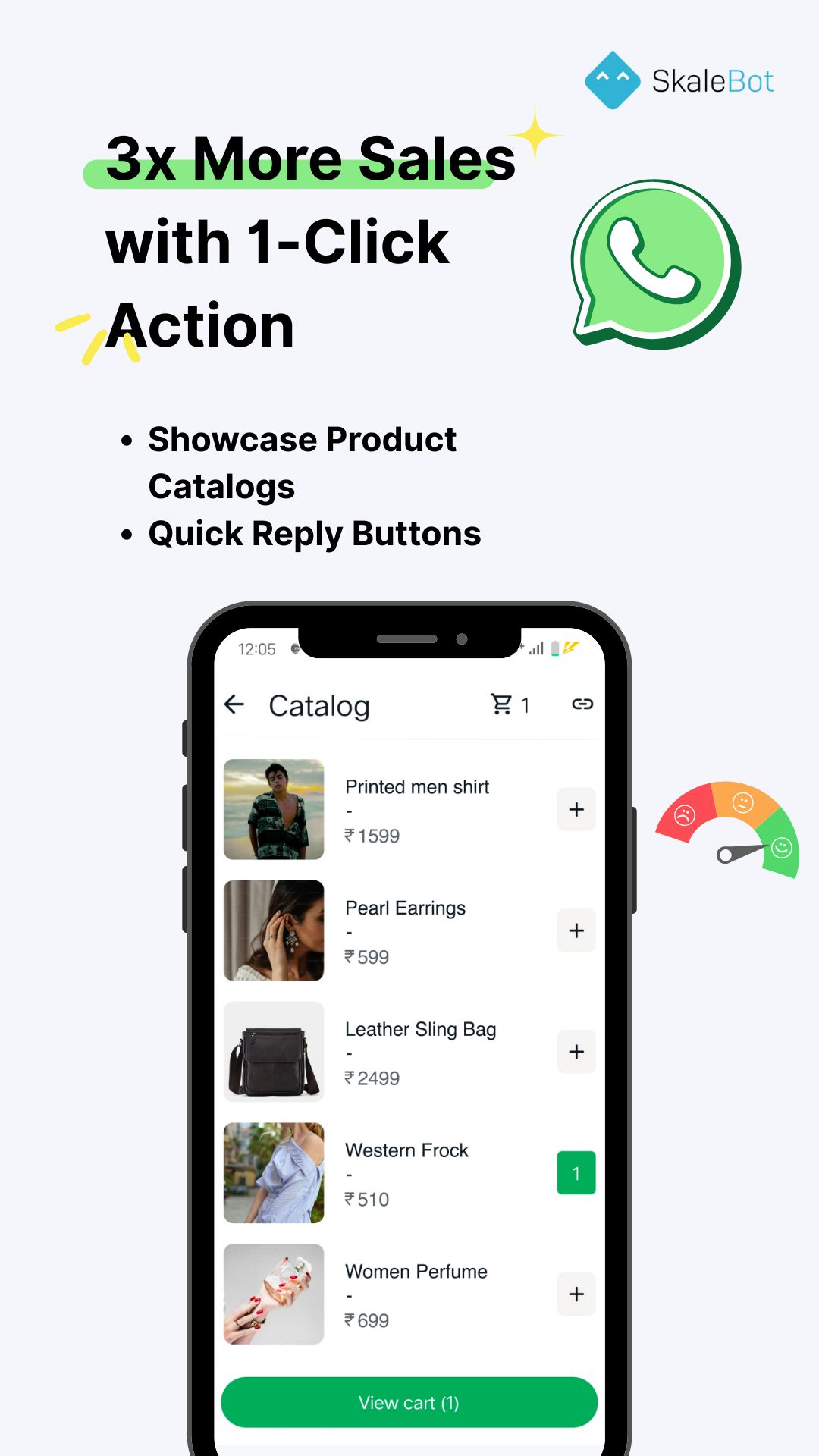 Use Catalogs for Flash sales, Festive campaigns (Diwali, Christmas, Ramadan, Black Friday), Big product launches, events / tournaments. Limited-time offers |
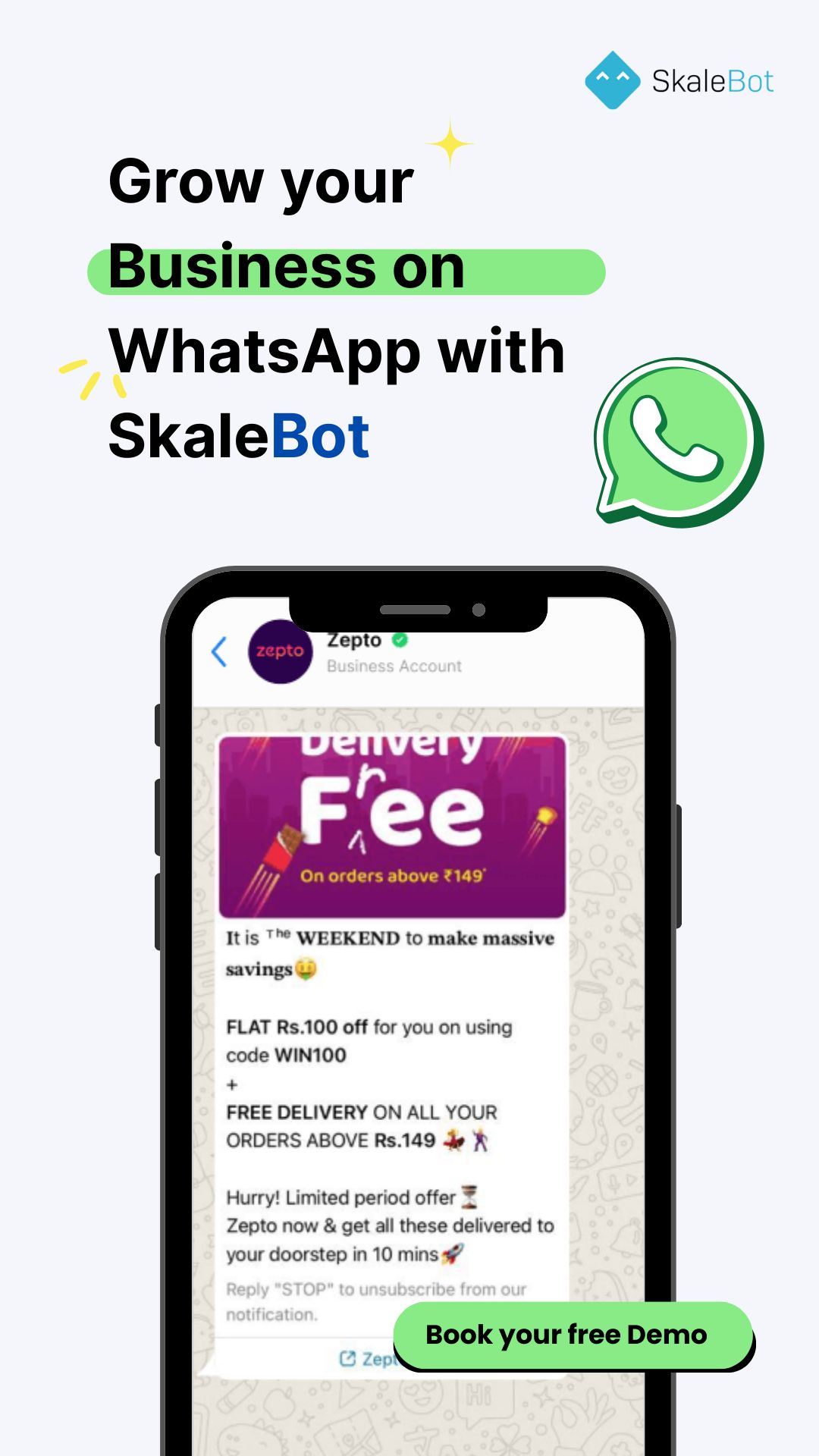 | Daily Messaging → Only When Value Is High & ExpectedDaily messages are risky, unless the user has explicitly opted into a daily flow. Safe cases for daily messages:
Rule: |
Never message more than once per day (Unless Customer start the chat)
This is a hard rule in WhatsApp marketing using Marketing Templates. Why:
Repeated daily messages feel spammy
Higher risk of block/report
Bad sender score affects your entire phone number quality
Bad for WhatsApp Business API compliance
Safe exception:
If the user replies or triggers an action (e.g., asks a question, clicks a button), you can continue the conversation dynamically without risks in your 24 hour window.
What actually hurts your WhatsApp performance?
Sending random blasts without segmentation
Sending promo-only messaging
Sending at peak personal hours (8–11 pm)
Sending back-to-back messages without context
These increase opt-outs, mute rates, and conversation costs.
Segment/Group your customers based on intent, Send messages at the best time, Plan a simple 30-day content calendar for WhatsApp Marketing
Mix different types of content: Value, Education, Offers, Social proof, Reminders, Light conversation starters

Until next time,
Team SkaleBot